Why AI websites all look the same
Two tradesmen in neighbouring villages outside Hereford, both replacing a website that hadn’t been touched since 2016, spent the same Tuesday evening doing the same thing: typing “plumber, Herefordshire, family-run, 24 hour emergency callout” into an AI website builder. Twenty minutes later they each had a live site. Blue and white colour scheme. A hero photo of a smiling tradesman holding a wrench. Three icons across the middle: Fast, Friendly, Fully Insured. A testimonial carousel. A contact form at the bottom. Neither man had met the other, and neither had seen the other’s site, but if you swapped the logos, you would not be able to tell them apart.
That’s not a coincidence, and it’s not one you’ll avoid by prompting harder. It’s how the tool works.
Plenty of one-person outfits genuinely just need a page that exists and says the right things, and an AI builder does that job faster and cheaper than an agency ever could. Fine. But if you’re one of three or four businesses in a ten mile radius doing the exact same thing, a website that just exists was never the job. The job was giving someone a reason to call you and not the next name down the list.
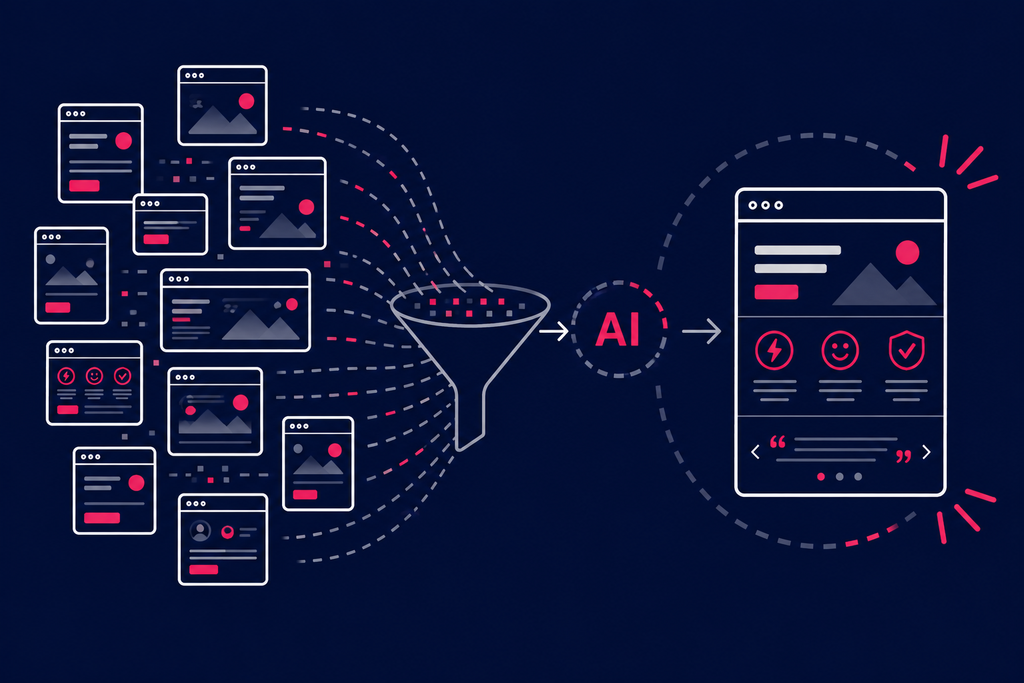
Generative models don’t design, they average. They’re trained to predict the most statistically likely output from a dataset that was already narrowing toward safe, familiar patterns before AI ever got involved. Feed one a five-word prompt and it hands back the median for businesses like yours: same layout, same stock-photo fake warmth, same three-icon trust bar, because that combination scored best across thousands of near-identical prompts. Researchers tracking this through 2026 call it visual convergence, and it shows up trade by trade: cybersecurity sites in navy and electric blue with a padlock mark, wellness brands in lowercase wordmarks and earth tones, SaaS products with the same typeface and a floating dashboard graphic. Plumbers and electricians get their own version. The tool isn’t broken. It’s doing exactly what it was built to do: find the average. And the average, by definition, looks like everyone else averaging toward the same point.
None of that would matter if design didn’t do real work, but it does. People form a snap judgement about how good a website looks in about fifty milliseconds, long before they’ve read a word of copy, and that judgement colours whether they trust what follows. When two competitors’ sites look identical, that shortcut disappears and the decision falls back to whatever’s left: price, or whoever picks up the phone first. Fine, if you want to compete on price. Most of the trades and local businesses we work with don’t.
So try this, and it’ll take less time than the AI builder did. Pull up your homepage next to two competitors’ ones, the ones you actually lose jobs to. Cover the logos and phone numbers, hand it to someone who doesn’t know your business, and give them ten seconds to tell the three apart. If they can’t, you don’t have a website problem you can fix with a better prompt. You have a positioning problem: nobody’s worked out, and written down, what you actually do differently from the other two. No builder, AI or otherwise, can generate that for you. Someone has to sit down and figure it out first.